

A Complete Guide to Monthly Car Hire in Rwanda: What Every Traveller Needs to Know
A Complete Guide to Monthly Car Hire in Rwanda, Rwanda has quietly become one of the easiest countries in Africa to drive yourself around. The roads into Kigali are smooth, the traffic police are strict but fair, the signage is clear, and drivers here follow the rules more than in most neighboring countries. That combination is exactly why so many long-stay visitors NGO workers, business travellers, missionaries, digital nomads, researchers, and families relocating for a few months end up choosing a monthly car rental instead of paying for a taxi or Uber every single day.
If you are weighing up whether to rent a car for a month in Rwanda, this guide walks through everything you actually need to decide: what it costs, what documents you need, which vehicle suits your trip, how insurance works, what the roads are really like, and the small details that catch first-time renters off guard.
Why Choose Monthly Car Hire Over Daily Rentals
Daily car rental in Rwanda typically runs from around $ 40 a day for a small saloon car up to $70–$130 a day for a 4×4 SUV or Land Cruiser. Multiply that by 30 days and the daily rate quickly becomes expensive. Monthly rentals work differently. Rental companies in Kigali price long-term hire on a bulk basis, so the effective daily cost drops sharply often by 30 to 50 percent compared to booking the same car one day at a time.
Beyond the price, there are practical reasons long-stay visitors prefer monthly hire:
- You are not re-negotiating a booking every few days.
- You get a consistent, familiar vehicle rather than whatever is available that morning.
- Most companies will service the car for you during the month at no extra charge if a genuine mechanical issue comes up.
- You can plan spontaneous weekend trips to Lake Kivu, Musanze, or Akagera without arranging a new rental each time.
- For business travellers and NGO staff, a single monthly invoice is far easier to expense than a stack of daily receipts.
How Much Does Monthly Car Hire Cost in Rwanda?
Pricing depends heavily on the vehicle class, but here is a realistic breakdown based on current market rates from Kigali-based rental operators.
Economy and compact cars (e.g., Toyota Vitz, Suzuki Alto): Roughly $500–$700 per month. Good for city driving in Kigali, running errands, and short trips on paved roads.
Mid-size SUVs and crossovers (e.g., Toyota RAV4, Hyundai Tucson, Suzuki Grand Vitara): Roughly $900–$1,400 per month. This is the sweet spot for most travellers enough ground clearance for rural roads, comfortable for long drives, and still economical on fuel.
4×4 SUVs and Land Cruisers (e.g., Toyota Land Cruiser TXL, Land Cruiser Prado, Nissan Patrol): Roughly $1,800–$3,500+ per month. Necessary if you plan regular trips to Volcanoes National Park, Nyungwe Forest, or cross-border routes into Uganda, since some rural and park-access roads are unpaved and steep.
Vans and minibuses for groups (e.g., Toyota Hiace): Priced individually depending on seating capacity and whether a driver is included, typically starting from around $1,500 per month for self-drive.
A few things move the price up or down: whether you take the car with a driver or self-drive, whether you need cross-border permission to enter Uganda, Kenya, or Tanzania, the age and mileage of the vehicle, and how far in advance you book. Booking a month ahead, rather than walking into an office on arrival, almost always secures a better rate and better vehicle availability.
Most monthly quotes already include basic third-party insurance and a set mileage allowance. Always ask the company to confirm, in writing, exactly what is and is not included before you pay a deposit — this single question avoids the majority of disputes at drop-off.
Self-Drive or Chauffeur-Driven — Which Should You Choose?
Rwanda is genuinely one of the more relaxed African countries to self-drive in. Roads are well maintained by regional standards, drivers generally stay in lane, and the traffic police are firm about speed limits and seatbelts rather than looking for bribes. That said, the choice between self-drive and a driver-guide usually comes down to three factors:
Choose self-drive if: you are comfortable driving on the right-hand side of the road, you want full flexibility to stop wherever you like, and your monthly rental will mostly be used for city commuting with occasional weekend trips.
Choose a driver-guide if: you are unfamiliar with Rwanda’s mountainous terrain, you plan frequent trips to gorilla trekking sites in Volcanoes National Park (where roads can be steep, narrow, and require local knowledge of checkpoints), or you simply want to relax and take in the scenery rather than concentrate on driving.
A dedicated driver typically costs an additional $30 to $50 per day, or a combined vehicle-plus-driver package runs roughly $100 to $150 per day depending on the vehicle. For a full month, most companies will offer a discounted monthly driver rate if asked directly rather than paying the daily add-on repeatedly.
Documents You Need to Rent a Car in Rwanda
Before you book, make sure you have the following ready:
- A valid driving licence. If your licence is not in English or French, you will need an International Driving Permit (IDP) alongside your national licence. Rental companies check this at pickup, and traffic police can ask for it at checkpoints.
- A passport (for foreign visitors) or national ID (for residents).
- Proof of accommodation or a local contact address, which some companies request for their records.
- A refundable security deposit, usually held on a card or in cash, released at the end of the rental once the vehicle is checked over.
The minimum legal driving age in Rwanda is 18, but nearly every rental company sets its own minimum at 20 to 25 years old, and drivers under 25 are sometimes charged a young-driver surcharge. If you are travelling on a company or NGO account, ask in advance whether the company accepts corporate billing, since this speeds up the paperwork considerably.
What to Know About Driving in Rwanda
Rwanda drives on the right-hand side of the road, which catches out visitors used to left-hand traffic. A few practical notes that matter for a month-long rental:
- Speed limits are generally 60 km/h in built-up areas and 80 km/h on the open road unless signed otherwise, and they are enforced with radar, particularly on the main routes out of Kigali.
- Seatbelts are mandatory for driver and front passenger, and police do issue on-the-spot fines for non-compliance.
- Motorcycle taxis (moto-taxis) are everywhere in Kigali and weave through traffic. Give them extra space, especially at junctions and roundabouts.
- Fuel is sold in litres at stations throughout Kigali and most district towns; petrol and diesel prices are set nationally and change periodically, so budget a reasonable buffer if you’re commuting daily or heading to the national parks regularly.
- Rural and park-access roads — particularly around Volcanoes National Park near Musanze and parts of Nyungwe Forest — can be steep, narrow, and unpaved in sections, which is where a 4×4 genuinely earns its keep. The main paved highways connecting Kigali to Musanze, Huye (Butare), Rubavu, and the Uganda and Tanzania borders are in good condition.
- Checkpoints are common on major routes. Police are generally polite and simply want to see your licence and vehicle documents, which the rental company will provide with the car.
Choosing the Right Vehicle for Your Month in Rwanda
Think about what your typical week will actually look like before committing to a vehicle class.
If you’re mostly staying in Kigali for work, meetings, and city life, a compact saloon or small SUV is perfectly adequate and will save you significantly on fuel and monthly rate compared to a large 4×4.
If you plan regular weekend trips to Lake Kivu (Rubavu, Karongi, or Rusizi), Huye, or the Eastern Province towards Akagera, a mid-size SUV like a RAV4 or Grand Vitara gives you comfort on the highway and enough clearance for the occasional rough patch.
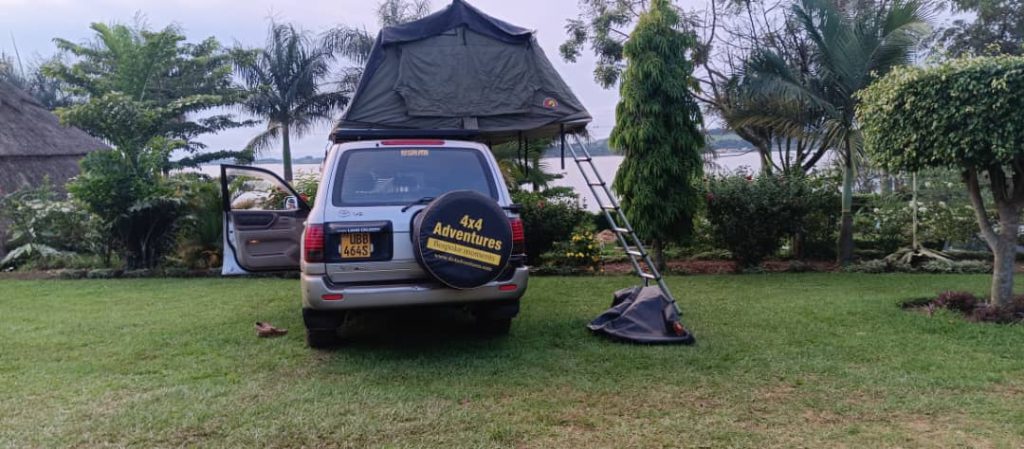
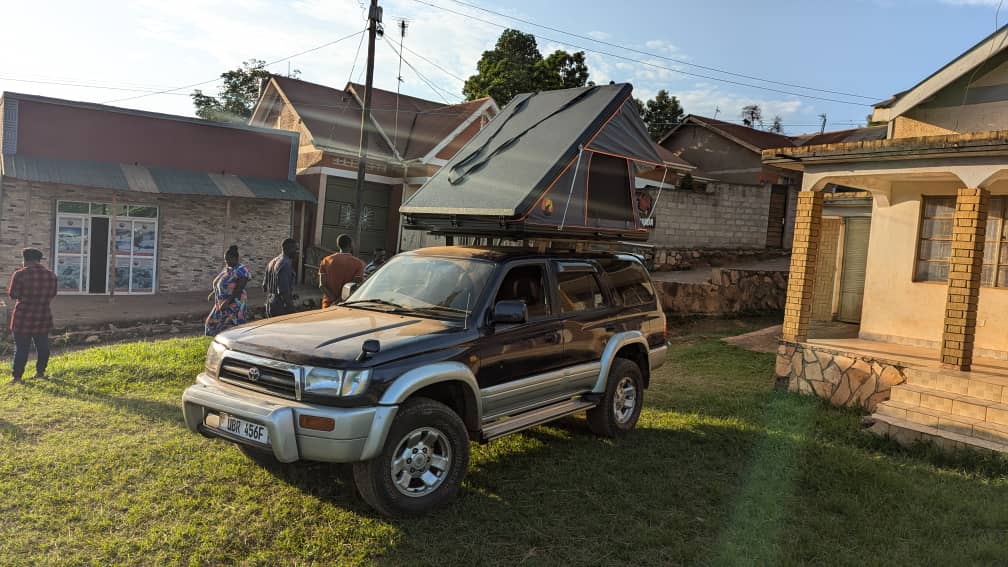
If gorilla trekking, golden monkey tracking, or serious off-road exploration of Nyungwe and Akagera National Parks are on your calendar more than once during your stay, a proper 4×4 such as a Land Cruiser or Land Rover Defender is worth the extra monthly cost. Some rental companies also offer 4x4s fitted with rooftop tents and camping equipment, which is popular for travellers wanting to combine a self-drive road trip with camping along Lake Kivu or inside Akagera.
If you’re travelling as a family or larger group, ask about seven-seater SUVs or a Toyota Hiace van, which can also handle luggage-heavy trips comfortably.
Cross-Border Travel: Uganda, Kenya, and Tanzania
One advantage of renting in Rwanda for a month rather than a week is that it opens up the possibility of a longer regional road trip. Many Kigali-based companies allow cross-border travel into Uganda, and some extend this to Kenya and Tanzania, but this requires advance notice. You’ll typically need:
- Written permission from the rental company (a cross-border authorisation letter).
- Additional cross-border insurance, sometimes called a COMESA Yellow Card, which covers third-party liability across East African Community member states.
- A small cross-border fee, which varies by company and destination.
If a regional trip is even a possibility during your month in Rwanda, mention it when you book rather than after you’ve already picked up the car — retrofitting the paperwork later is far more difficult and sometimes simply not possible mid-rental.
Insurance: What’s Actually Covered
Ask specifically about three things before signing anything: what the deductible (excess) is in the event of an accident, whether the policy covers windscreen and tyre damage (often excluded from basic packages), and whether the insurance is valid outside Rwanda if you’re planning a cross-border trip. Comprehensive cover typically costs more but is worth it for a full month of driving, particularly if you’ll be covering unfamiliar rural roads. Take dated photos of the vehicle’s condition — bodywork, tyres, windscreen, and mileage — at pickup, and ask the company to countersign a simple condition report. This single habit prevents almost every dispute that comes up at the end of a rental.

Practical Tips for a Smooth Month-Long Rental
- Book at least one to two weeks ahead for the best monthly rate and to guarantee the specific vehicle you want, especially during peak tourist season (June to September and December to February).
- Ask for airport pickup and drop-off. Most established companies in Kigali offer this free or for a small fee, and it saves you arranging separate transport for day one.
- Clarify the mileage allowance. Some monthly packages include unlimited mileage; others cap it and charge per extra kilometre, which matters if you’ll be driving out to the parks frequently.
- Check the spare tyre, jack, and toolkit are present and in working order before you drive off — rural roads occasionally mean punctures.
- Save the rental company’s emergency contact number in your phone. Reputable operators offer 24-hour roadside assistance as standard for monthly clients.
- Keep a printed and digital copy of your licence, IDP, and rental agreement in the car at all times, since checkpoints are routine on the main highways.
- Return with a full tank unless your agreement specifies otherwise — most companies charge a premium for refuelling on your behalf.
Final Thoughts
Monthly car hire in Rwanda gives you the independence to live and travel on your own schedule — commuting around Kigali during the week and heading out to the volcanoes, Lake Kivu, or Nyungwe Forest on weekends, without the daily hassle of arranging transport. The country’s well-maintained roads, orderly traffic culture, and competitive rental market make it one of the more straightforward places in the region to hire a car for an extended stay. The key to a smooth experience comes down to the basics: choose the right vehicle for how you’ll actually use it, confirm what your insurance and mileage allowance cover in writing, have your documents in order before you arrive, and book early enough to get a fair monthly rate. Get those right, and a month behind the wheel in the Land of a Thousand Hills is one of the best ways to see the country.