

10 Essential Tips for Self-Drive in East Africa
10 Essential Tips for Self-Drive in East Africa, there is arguably no better way to experience East Africa than from behind the wheel of your own vehicle. Uganda, Kenya, Tanzania, and Rwanda are collectively home to some of the continent’s most extraordinary landscapes misty volcanic ranges, vast open savannahs, the shimmering waters of Lake Victoria, and forests alive with primates found nowhere else on Earth.
A self-drive road trip through the region allows travelers to move at their own pace, linger at a viewpoint, or pull over the moment a herd of elephants appears at the roadside.
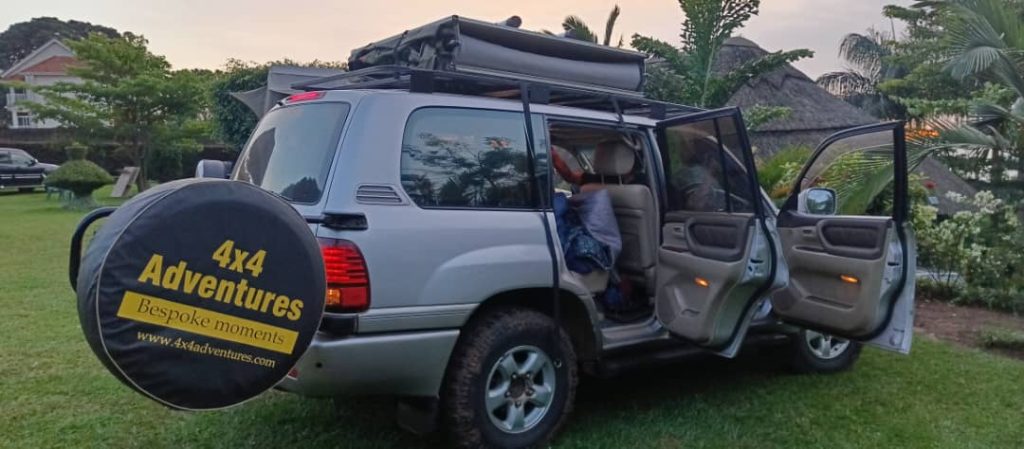
With reasonably good infrastructure on major routes and a growing self-drive tourism industry, exploring East Africa by car has become an increasingly popular way to see the region. It does, however, reward careful preparation.
East Africa’s Roads: What to Expect
Road conditions vary considerably across the region, and understanding this before setting off will shape both your itinerary and your choice of vehicle.
In Uganda, the primary highways radiating out of Kampala toward the country’s major national parks and border towns are generally surfaced in smooth asphalt, though frequent speed bumps and occasional potholes are part of the experience. The final stretch into most lodges and park entrances, however, almost always involves gravel or dirt.
Kenya and Tanzania follow a similar pattern: well-maintained tarmac connects the larger cities, while the roads leading into reserves such as the Maasai Mara, Serengeti, or Samburu are unpaved and can become significantly more demanding during the rainy seasons. Rwanda, by contrast, is known for having some of the best-maintained roads in the region, even in more mountainous terrain.
Across all four countries, the greatest variable is not the road surface itself but the terrain and weather. Routes that look straightforward on a map can slow considerably once corrugations, river crossings, or steep hillside switchbacks come into play.

Choosing the Right Vehicle
The vehicle you choose should be dictated by your itinerary, not the other way around.
If your route stays largely on tarred national highways Kampala to Kigali, for example, or Nairobi to major towns along the main corridors a standard sedan or compact 4×2 will usually manage comfortably. The moment your plans include national parks, remote border crossings, or destinations such as Kidepo Valley, Karamoja, or the Serengeti’s more far-flung sectors, a high-clearance 4×4 becomes essential rather than optional.
A well-equipped 4×4, ideally a Land Cruiser, Land Cruiser Hardtop, or similar model favoured by regional operators, offers the ground clearance and traction needed for gravel, mud, and the deep ruts that can develop during the rains. Many rental companies in the region also offer one-way rentals, allowing travellers to collect a vehicle in one country Entebbe, for instance and drop it off in another, such as Nairobi.
Rules of the Road and Safety
East Africa drives on the left-hand side of the road except in Rwanda where you will use the right-hand side., a system familiar to travellers from the UK, Australia, or Southern Africa, and most rental vehicles are right-hand drive.
Speed limits differ slightly by country but follow a broadly similar structure: open highways typically allow speeds up to 80–100 km/h, dropping to around 40–50 km/h through towns and trading centres, and often as low as 30–40 km/h within national parks, where wildlife has the right of way. Uganda has recently tightened enforcement of these limits, so it is worth checking current regulations before departure.
Seatbelts are compulsory, the use of a handheld mobile phone while driving is prohibited, and drink-driving laws across the region are strictly enforced. It is also standard practice to carry a valid driving licence, passport, and, for cross-border travel, a COMESA insurance sticker or yellow card, along with proof of vehicle registration.
Night driving is best avoided wherever possible. Unlit roads, unmarked hazards, and the unpredictable movement of nocturnal wildlife and other road users make travel after dark considerably riskier throughout the region.

The Best Self-Drive Routes
One of the most rewarding circuits begins in Kampala and takes in Murchison Falls National Park, Kibale Forest, Queen Elizabeth National Park, and the gorilla trekking regions of Bwindi Impenetrable Forest, before continuing south into Rwanda via Kigali. Travellers with more time often extend the loop east into Kenya’s Maasai Mara or south into Tanzania’s northern circuit, linking the Serengeti, Ngorongoro Crater, and Lake Manyara.
For those seeking quieter, less-travelled terrain, Uganda’s Karamoja region and Kidepo Valley National Park offer a remote, rugged alternative, while Rwanda’s volcanic highlands provide a cooler, greener contrast to the savannah routes further north.
Most reputable regional operators can help design an itinerary suited to your available time, interests, and comfort level, with accommodation and permits particularly gorilla and chimpanzee trekking permits, which should be booked well in advance arranged ahead of time.
Ten Essential Tips for Self-Driving in East Africa
- Book early, and book a 4×4: There is a great need for well equipped 4×4’s especially in the peak seasons between June and October and December and February. If you book several months ahead, you’re more likely to get a vehicle and at a better price.
- Check the mileage and cross-border terms in advance. If your route involves driving through several countries, check whether your rental agreement allows this and whether you need a COMESA sticker or extra insurance. It’s important to check mileage limits, since regional itineraries can be quite long.
- Slow down for oncoming traffic and speed bumps. Gravel roads throw up loose stones at speed, and Uganda’s highways in particular are dotted with frequent, sometimes unmarked, speed bumps through trading centres. Easing off the accelerator protects both your vehicle and following drivers.
- Stop for travellers who may need assistance. On quieter rural stretches, a vehicle pulled over at the roadside may simply be watching wildlife or it may genuinely need help. A brief check is good practice in remote areas.
- Take out comprehensive insurance. Long stretches on unpaved roads take a toll on tyres and windscreens. The comprehensive cover, includes cross border cover where relevant, is worth the extra cost.
- Double check vehicle prior to departure. Walk around the car with the rental agent, checking the tyres, the windscreen and the undercarriage. Photograph any existing damage before signing.
- Make sure your fuel tank is full. Good filling stations may be a long way apart outside the big towns. A good rule of thumb is to stop and get gas before your tank is half empty, especially when entering national parks or remote areas.
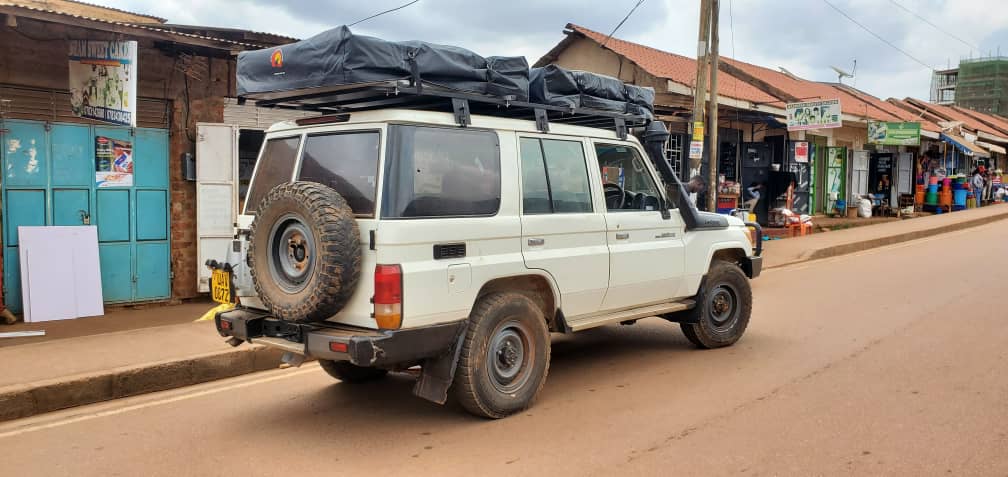
As a general rule, refuel whenever the tank drops below half, particularly before entering national parks or remote regions.
- Avoid driving after dark. Unlit roads, unpredictable pedestrians and cyclists, and wildlife crossing at dusk and dawn make night driving the single greatest risk factor for self-drive travellers in the region. Plan each day’s driving to finish well before sunset.
- Allow considerably more time than the map suggests: Road conditions, wildlife sightings, border formalities, and the sheer scale of the landscape mean journeys almost always take longer than distance alone would indicate. Build in generous buffers and resist the urge to overschedule.
- Carry offline navigation and stay connected. Mobile data coverage, while reasonably strong along MTN and Airtel networks in Uganda and their equivalents elsewhere, can be patchy in remote areas. Download offline maps in advance and pick up a local SIM card on arrival.
A Region Made for the Open Road
A self-drive road trip through East Africa is not simply a means of getting from one park gate to the next it is very often the highlight of the journey itself. With sensible preparation, the right vehicle, and a willingness to slow down and take the roads on their own terms, the region rewards travelers with a sense of freedom and discovery that few other forms of travel can match.