
African Honeymoon Safari: The Ultimate Guide to a Romantic Wildlife Adventure
Choosing where to spend the first days of married life is one of the most meaningful decisions a couple will make. An African honeymoon safari offers something few destinations can match: to tal privacy, five-star comfort, and the raw wonder of the natural world, all woven into a single unforgettable journey.
This guide walks you through everything you need to know before booking, from the best countries and lodges to seasonal timing and what actually makes a safari “honeymoon-ready.”
What Makes a Honeymoon Safari Different from a Regular Safari.
Not every safari is designed with couples in mind. A true honeymoon safari is built around three things a standard wildlife trip usually isn’t: privacy, pacing, and personalization.
- Privacy: it involves using exclusive-use vehicles, private dining setups, and secluded lodge suites instead of shared group tours
- Pacing: Fewer activities per day, more unstructured time, and flexibility to swap a game drive for a lie-in or a spa afternoon
- Personalization: Itineraries shaped around your interests, whether that’s photography, birding, primates, or simply slowing down together
Operators who specialize in honeymoon travel typically flag couples in advance so lodges can prepare small touches a decorated suite, a private table, a bottle of something local waiting on arrival.
Top Honeymoon Safari Destinations Compared
Uganda (Best for Primates and Value)
Uganda is often called the “Pearl of Africa,” and for honeymooners its biggest draw is the chance to combine a traditional savanna safari with primate encounters found almost nowhere else on Earth. Primate encounters are done in Bwindi Impenetrable National Park, a UNESCO World Heritage Site and Mgahinga national park.
Here couples can trek through dense, mist-covered rainforest to spend one profound hour observing a habituated mountain gorilla family at close range. This experience is described as more emotional than any other wildlife encounter in Africa. Because permits are limited and the terrain is genuinely rugged, gorilla trekking rewards a reasonable level of fitness, but lodges cater the pace to guests and offer porters to help with the climb.
Beyond the gorillas, Uganda’s landscape shifts dramatically from park to park. Queen Elizabeth National Park sits along the equator and delivers classic savanna game viewing lions (including the tree-climbing lions of Ishasha), elephants, buffalo, and hippos alongside crater lakes and open plains. A boat cruise along the Kazinga Channel, which connects Lake Edward and Lake George, is one of the best wildlife-viewing experiences in the country, with hippos, crocodiles, and elephants often visible from the water in a single afternoon.
In Kibale Forest, couples can track wild chimpanzees through the canopy, an activity that’s more physically active and unscripted than gorilla trekking but equally memorable. Because Uganda receives fewer tourists than Kenya or Tanzania, sightings tend to feel more private, and lodge rates are generally lower for a comparable level of luxury.
Best for: couples who want rare primate encounters, lush green scenery, and a real sense of discovery without East Africa’s premium price tag.

Kenya (Best for Classic Safari Romance)
Kenya is the country most people picture when they imagine an African honey moon safari”. They draw close pictures to endless golden grassland, acacia trees silhouetted against the sunset, and some of the highest concentrations of big cats on the continent.
The Maasai Mara National Reserve is Kenya’s flagship destination and one of the most storied safari locations in the world, home to resident prides of lion, healthy leopard and cheetah populations, and (during migration months) the thunder of over a million wildebeest and zebra crossing the Mara River.
Watching a river crossing together with crocodiles waiting below and predators stalking the banks is one of the most dramatic shared experiences a safari can offer.
Kenya’s tourism infrastructure has had over a century to mature, which means honeymooners get an unusually wide spread of accommodation styles: from classic 1920s-style canvas tents with copper bathtubs and colonial-era charm, to ultra-modern glass-walled suites with private plunge pools overlooking the plains.
Many camps in the Mara operate on private conservancies bordering the main reserve, which restrict vehicle numbers and allow night drives and off-road tracking both banned inside the reserve itself giving couples a more exclusive, flexible experience. Kenya also pairs naturally with a Diani Beach or Lamu Island extension along the Indian Ocean coast for a safari-and-beach combination.
Best for: first-time safari travelers who want the most iconic scenery, dependable wildlife sightings, and the broadest range of accommodation to fit different budgets.
Tanzania (Best for Combining Safari and Beach)
Tanzania is home to two of Africa’s most celebrated protected areas. The Serengeti National Park is vast over 14,000 square kilometers and offers some of the most consistent game viewing on the continent year-round, not just during the Great Migration.
The Ngorongoro Crater, a collapsed volcanic caldera, concentrates an extraordinary density of wildlife, including endangered black rhino, within a natural amphitheater just 20 kilometers across; a single day inside the crater can produce sightings of all of the Big Five. For a quieter, less-visited alternative, the Selous (Nyerere) and Ruaha reserves in southern Tanzania offer walking safaris and boat trips with a fraction of the visitor numbers found further north.
What sets Tanzania apart for honeymooners specifically is how naturally it combines with a beach finale. A short flight from the northern safari circuit lands couples on Zanzibar, an archipelago of white-sand beaches, turquoise water, coral reefs, and Stone Town’s UNESCO-listed old quarter with its Swahili and Omani architecture. The structure several days of dust, adventure, and early wake-up calls followed by several days of doing absolutely nothing on a beach is one of the most popular honeymoon formats in Africa for good reason.
Best for: couples who want two distinct honeymoon moods high-adrenaline safari followed by total beach relaxation in one seamless trip.
Botswana (Best for Exclusivity)
This is one of the best honey moon safari destinations in africa. Botswana built its tourism model around low volume and high value. Rather than large lodges and crowded viewing areas, the country limits the number of camps and beds allowed in its wilderness areas.
This vast inland river delta where the Okavango River fans out into a maze of lagoons, channels, and islands instead of ever reaching the sea. The result is a landscape unlike anywhere else in Africa: water-based wildlife viewing by traditional dugout mokoro canoe, silent and eye-level with the reeds, punctuated by land-based game drives on the delta’s drier islands.
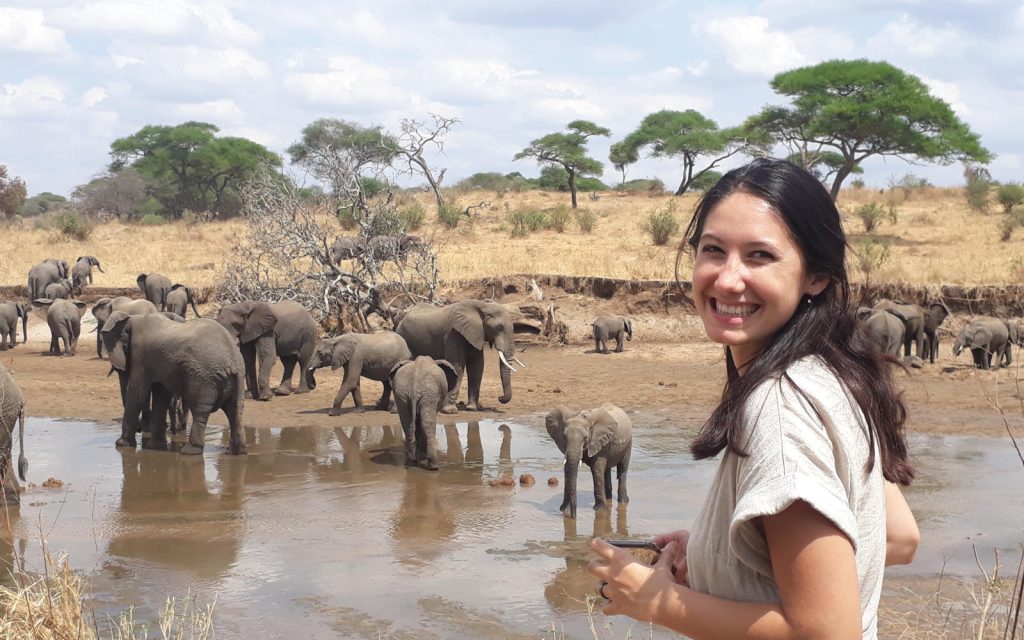
Beyond the Delta, Chobe National Park in the north famous for having one of the largest elephant populations in Africa.
You will able to spot herds of dozens along the Chobe River, then later cross to Kalahari in the south as you see the landscape of salt pans and desert-adapted wildlife.
Because camps are small often just six to twelve guest units couples frequently find themselves virtually alone at a watering hole or with an entire boat to themselves, and staff-to-guest ratios allow for a level of personalized service that’s hard to replicate elsewhere.
Best for: couples prioritizing seclusion, quiet, and a genuinely untouched wilderness feel, and willing to pay a premium for it.
South Africa (Best for Combining Safari with City and Wine)
South Africa offers something no other destination on this list can for a honey moon safari experience. The country has the ability to combine a big-game safari with a sophisticated city break and a world-class wine region. All of this within one country and often one relatively short itinerary.
Private reserves such as Sabi Sands, bordering Kruger National Park, are renowned for exceptional leopard sightings and are largely malaria-free, making them a popular choice for couples who prefer to skip anti-malarial medication. Many of these reserves operate with open-vehicle, off-road tracking, putting couples remarkably close to predators with an expert guide and tracker on board.
After the bush, couples typically fly into Cape Town, where Table Mountain, the Cape Winelands (Stellenbosch and Franschhoek), and the dramatic coastline of the Garden Route add an entirely different register to the honeymoon vineyard lunches, coastal drives, and boutique hotels instead of canvas tents.
This variety, combined with excellent flight connectivity and well-developed roads, also makes South Africa one of the more logistically straightforward countries on this list to plan.
Best for: couples who want maximum variety bush, city, and wine country with easier logistics and malaria-free safari options.
Signature Honeymoon Experiences
Private game drives with a dedicated guide and vehicle, tailored to your pace and interests rather than a fixed group schedule.
Luxury accommodation featuring private plunge pools, outdoor showers or bathtubs, and suites positioned for uninterrupted views over the bush.
Romantic dining bush breakfasts, sundowner picnics, and candlelit dinners set up away from the main lodge.
Couples’ spa treatments, often using indigenous ingredients and set in open-air treatment rooms overlooking the landscape.
Hot air balloon safaris, offering a sunrise view over the plains followed by a champagne breakfast on landing a favorite for anniversary photos as much as honeymoons.
When to Go: Choosing Your Safari Season.
| Season | Months | What to Expect |
| Dry season | June – October | Best game viewing; animals cluster around water sources; peak pricing |
| Green season | November – March | Lush scenery, newborn wildlife, excellent birdwatching, fewer crowds, lower rates |
| Green season | July – September (Mara), varies (Serengeti) | Prime time for Kenya/Tanzania migration viewing |
There is no universally “wrong” time to go the right season depends on whether you’re prioritizing dramatic wildlife sightings, budget, or a quieter, greener landscape.
Budgeting for a Honeymoon Safari
Costs vary significantly by destination, season, and accommodation tier. As a general guide:
- Mid-range honeymoon safari: comfortable tented camps or lodges, shared vehicle game drives
- Luxury honeymoon safari: private suites, exclusive-use vehicles, personal butler service
- Ultra-luxury: private villas or entire camps, light-aircraft transfers between parks
Gorilla trekking permits (Uganda and Rwanda), park entry fees, and internal flights are often the largest line items outside accommodation, so it’s worth requesting a full cost breakdown rather than a single bundled price when comparing operators.
How to Choose the Right Safari Operator
Before booking, ask any operator:
- Do they specialize in honeymoon or couples’ travel, or is this a general package?
- Can they confirm private vehicle and guide use, not shared transport?
- What is their cancellation and rebooking policy?
- Is the itinerary fully customizable, or built from a fixed template?
A well-run operator will build the trip around your interests rather than slotting you into a standard route.
Frequently Asked Questions
How many days should a honeymoon safari be? Most couples spend 7–10 days on safari, sometimes extended with a beach or city add-on. Shorter trips of 4–5 days work well for a single-country, single-park focus.
Is a honeymoon safari safe? Reputable lodges and operators maintain strong safety standards, experienced guides, and vetted vehicles. Discuss any specific health precautions, including malaria prevention, with a travel health professional before departure.
Do we need to be experienced travelers? No. Most couples booking a honeymoon safari are on their first visit to Africa, and operators design itineraries with first-timers in mind.
What should we pack? Lightweight neutral-colored clothing, layers for cool mornings and evenings, a good camera or binoculars, and comfortable closed-toe shoes for walking safaris.
Start Planning Your Honeymoon Safari
An African honeymoon safari isn’t just a trip — it’s a shared story you’ll tell for the rest of your marriage. Whether that story includes gorillas in a misty Ugandan forest, lions on the Maasai Mara plains, or a mokoro gliding through the Okavango Delta, the right itinerary turns a good honeymoon into an extraordinary one.
If you’re ready to start planning, reach out for a personalized itinerary built around your travel dates, budget, and the experiences that matter most to you.