
Best Time to Visit Uganda, Rwanda, Kenya & Tanzania for a Self-Drive Safari (2026/2027 Guide)
Best Time to Visit Uganda, Rwanda, Kenya & Tanzania for a Self-Drive Safari, East Africa is the only region on earth where a single road trip can take you from misty gorilla forests to open savannah teeming with lions, and on to the banks of a river where two million wildebeest thunder across in a cloud of dust and spray.
Uganda, Rwanda, Kenya and Tanzania sit side by side, linked by drivable borders, which makes a self-drive safari across all four one of the most rewarding overland adventures in Africa. But because these four countries don’t share one climate, one migration pattern or one set of border rules, timing your trip well is what separates an average holiday from the safari of a lifetime.
This guide breaks down exactly when to go, country by country and month by month, and covers the practical self-drive details visas, insurance, road conditions and border crossings that most travel blogs leave out.

Why Timing Matters More on a Self-Drive Safari
When you are being driven by a guide, timing mistakes get absorbed by someone else’s local knowledge. On a self-drive trip, you are the one navigating muddy murram roads, judging river crossings, and deciding whether a shortcut through a national park is passable after rain. Choosing the right season isn’t just about better wildlife sightings it directly affects:
- Road conditions. Many rural and park roads in Uganda, Tanzania and parts of Kenya are unpaved. Heavy rain turns them into thick, axle-deep mud that can strand even a well-equipped 4×4.
- Border crossing speed. Queues at Malaba, Busia, Gatuna/Katuna and Namanga move faster in the dry months when fewer trucks are stuck on approach roads.
- Fuel and rest-stop planning. Some routes have long stretches between towns, and flooded low points can force detours of several hours.
- Wildlife density. Dry-season game viewing concentrates animals around permanent water sources, which matters enormously when you’re spotting wildlife from your own vehicle without a guide’s radio network.
With that context, here’s how the region breaks down.
The Big Picture: East Africa’s Two Seasons
Despite covering four countries and several climate zones, East Africa’s weather follows a broadly predictable rhythm:
- Long dry season: June to September/October: The classic safari window across the whole region. Grass is short, animals gather at waterholes, roads are firm, and skies are clear. This is peak season, peak pricing, and peak crowds at the famous spots.
- Short dry season: late December to February: A second, often underrated dry window. Warm, mostly rain-free, and excellent for gorilla trekking, predator sightings and self-driving without mud.
- Long rains: March to May: The wettest stretch of the year in most of the region. Some roads become genuinely difficult or impassable for self-drivers, and many camps close or drop prices sharply.
- Short rains: October to November: Shorter, less intense afternoon downpours. Landscapes turn green, birdlife explodes, and self-driving is still very manageable outside a handful of black-cotton-soil roads.

Because Uganda and Rwanda sit on the equator while Kenya and Tanzania stretch further from it, there’s some local variation worth knowing before you plan a route.
Uganda: Best Time for Self-Driving the Pearl of Africa
Uganda has two dry seasons: December to February, and the longer, more reliable June to August. These are the best months for self-drivers heading to Bwindi Impenetrable National Park, Queen Elizabeth National Park, Murchison Falls and Kidepo Valley. Roads are firmer, river fords are shallower, and wildlife clusters around the Kazinga Channel and the Nile, making game drives far easier without a professional guide reading the terrain for you.
The rains fall March to May and September to November, with April typically the wettest month, especially around Bwindi in the southwest. Gorilla trekking is still possible in the wet season and it’s genuinely worth considering, since trails are far less crowded and Uganda’s Wildlife Authority now offers discounted low-season permits in April, May and November.
The trade-off is a steeper, muddier climb through the forest, so it suits fitter travelers more than families with young children.
Self-drive note: the Ishasha and Kidepo tracks in particular become difficult in heavy rain. If your route includes these remote sectors, stick to the June–August or December–February windows.
Rwanda: Best Time for Gorilla Trekking and Volcanoes National Park
Rwanda’s climate mirrors Uganda’s closely, with June to September as the long dry season and December to mid-February as the short one. Both are ideal for trekking Volcanoes National Park’s habituated gorilla families and for game drives in Akagera, Rwanda’s savannah park in the east a worthwhile self-drive detour that most visitors skip.
Rwanda’s roads are the best-paved and best-maintained in the region, which makes it the most forgiving country to self-drive in during the shoulder and rainy months. Even in April and May, the tarmac highway from Kigali to Musanze (the gateway to gorilla trekking) stays fully drivable; it’s the forest trails themselves, not the roads, that turn muddy.
Budget tip: Rwanda’s gorilla permits cost more than Uganda’s, but Rwanda also runs a low-season discount roughly November through May, and pairing a Volcanoes trek with a night or two in Akagera or Nyungwe can unlock a meaningful reduction well worth asking your permit-booking operator about before you fix your dates.

Kenya: Best Time for the Maasai Mara and the Great Migration
Kenya’s safari calendar centers on one unmissable event: the Great Migration’s Mara River crossings, when over a million wildebeest, zebra and gazelle funnel across crocodile-filled water into the Maasai Mara.
The herds are typically present in the Mara from July through October, with the most dramatic crossings concentrated in August and September. This is usually the peak season across the board. This implies that you need to book self-drive vehicles and Mara conservancy access months ahead.
Outside migration season, Kenya still delivers exceptional year-round self-drive safari country. January and February bring dry, dust-bowl conditions ideal for predator sightings around Amboseli, Lake Nakuru and Tsavo, plus newborn wildlife and clear views of Kilimanjaro. March to May is Kenya’s wettest period and the one stretch self-drivers should generally avoid the black-cotton soil roads around the Mara become notoriously difficult, sometimes requiring winching even for experienced 4×4 drivers.
The short rains of November are gentler and often produce lush, uncrowded, and beautifully green safari conditions at a fraction of peak-season rates.
Tanzania: Best Time for the Serengeti, Ngorongoro and the Wildebeest Calving Season
Tanzania holds the other half of the Great Migration story. The herds spend December to March on the short-grass plains of the southern Serengeti and Ndutu, where roughly half a million calves are born in a matter of weeks an extraordinary and comparatively uncrowded self-drive spectacle, since most travelers focus on the northern Mara crossings.
From April to June the migration moves northwest through the central and western Serengeti, culminating in the Grumeti River crossings in June, before pushing on toward the Mara River and Kenya by July. Tanzania’s dry season (June to October) offers the firmest roads and best all-round game viewing in the Serengeti, Tarangire and Ngorongoro Crater, the last of which is a year-round destination largely unaffected by seasonal rain thanks to its enclosed crater ecosystem.
Self-drive note: the Serengeti’s internal roads are largely unpaved and can flood in the March–May long rains, particularly around Ndutu and the southern plains. Many self-drive operators restrict access to certain sectors during this period, so confirm route feasibility with your rental company before committing to a wet-season itinerary.
Month-by-Month Snapshot for a Four-Country Self-Drive Route
| Months | Uganda & Rwanda | Kenya | Tanzania | Self-Drive Verdict |
| Jan – Feb | Dry, great trekking | Dry, predator season | Calving season, Ndutu | Excellent all-round window |
| Mar – May | Rainy, permits discounted | Wettest period, | Long rains, some roads close | Toughest self-drive months; budget-friendly if flexible |
| Jun | Dry season begins | Migration builds | Grumeti crossings | Very good, ahead of peak crowds |
| Jul – Sep | Dry season begins | Mara River crossings | Northern Serengeti crossings | Best wildlife, book vehicles early |
| Oct | Peak dry season | Migration departs south | Dry, quieter parks | Great value, still dry |
| Nov | Short rains begin | Short rains, green season | Short rains | Good value, manageable roads |
| Dec | Dry returns | Dry begins | Calving season begins | Strong start to the peak window |
Planning Your Self-Drive Route: Documents, Insurance and Border Crossings
A self-drive trip spanning four countries needs its paperwork sorted before you leave, not at the border.
Visas. The East Africa Tourist Visa covers Uganda, Rwanda and Kenya on a single multiple-entry visa, which is a major time-saver for a self-drive loop between those three. Tanzania sits outside this arrangement and requires its own separate visa, applied for in advance or on arrival depending on your nationality.
Driving documents. Carry your national driving license alongside an International Driving Permit (IDP). Some rental companies will accept a home license alone within East Africa, but an IDP avoids any ambiguity at land borders and with traffic police.
COMESA insurance. This regional third-party insurance sticker is the single most important document for cross-border self-drive travel, covering your vehicle across Uganda, Kenya, Rwanda, Tanzania and beyond.
It’s typically arranged through your rental company and paid or renewed at the border you’re crossing, usually valid for around two to four weeks depending on the issuing point.
Vehicle authorization letter. Any rental company allowing cross-border travel will issue a signed letter of authority confirming the vehicle is approved to leave the country of registration. Border officials will ask for this, and crossing without it can mean being turned back.
Yellow fever certificate. Mandatory for entry into all four countries and checked more rigorously at some crossings than others don’t rely on it being skipped.
Key border posts for a self-drive loop include Malaba and Busia (Uganda–Kenya), Katuna/Gatuna (Uganda–Rwanda), and Namanga (Kenya–Tanzania). Expect crossings to take two to four hours with full paperwork in order; weekends and holidays add to the wait, so early-morning crossings are the smoother option.

Practical Self-Drive Tips for East Africa
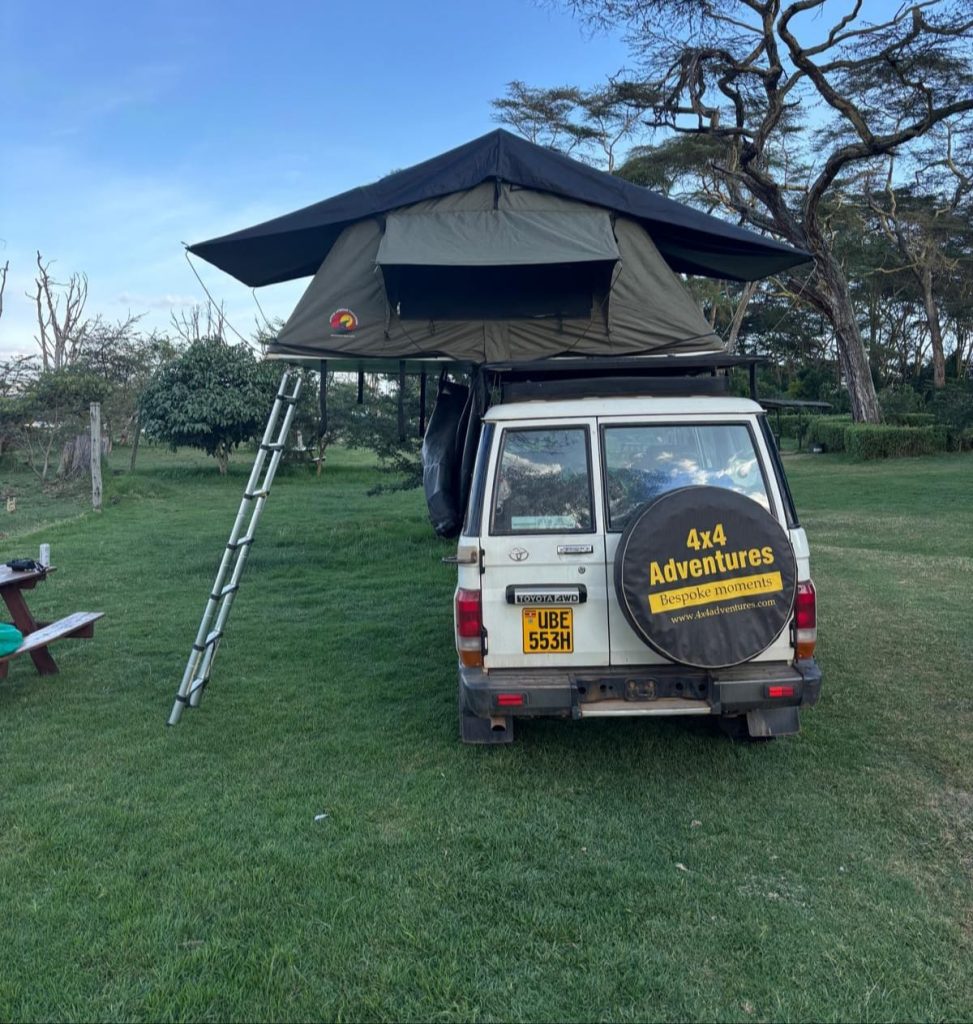
- Vehicle choice. A 4×4 with high clearance is non-negotiable outside the main highways Land Cruisers are the regional standard for good reason. If your route includes Kidepo, the Serengeti’s southern circuit, or Mara conservancy tracks in the rains, confirm your rental includes recovery gear and a satellite phone or reliable roaming SIM.
- Driving side. All four countries drive on the left, with UK-style road signage, though enforcement and road markings vary considerably once you leave paved highways.
- Fuel planning. Fill up in every town of reasonable size; fuel stations thin out fast between parks, particularly through Kidepo, southern Tanzania and the Mara’s outer conservancies.
- Night driving. Avoid it wherever possible. Livestock, unlit vehicles, and unmarked potholes make rural roads genuinely hazardous after dark across all four countries.
- Park entry timing. Most national parks operate on a 24-hour permit system from time of entry, so plan your gate arrival time deliberately to maximize back-to-back game drives.
- Gorilla permits. Book three to twelve months ahead for peak season (June–September, December–February); Uganda’s permits run roughly USD 800 in standard season with a discounted rate in April, May and November, while Rwanda’s sit significantly higher, reflecting its lower-volume, higher-value trekking model. Prices are set by the respective wildlife authorities and are worth reconfirming directly with a licensed operator before booking, since tariffs are reviewed periodically.
Choosing Your Season Based on What You Want to See
If a single trip has to prioritize one thing, let that priority set your calendar:
- Gorilla trekking as the main event → June–September or December–February in Uganda and Rwanda.
- Mara River wildebeest crossings → July–September in Kenya’s Maasai Mara.
- Wildebeest calving season and newborn predators → January–March in Tanzania’s Ndutu and southern Serengeti.
- Lowest crowds and best value with manageable roads → November, or early June before the peak season crowds arrive.
- Avoid entirely for a self-drive trip → late March through May, when rains are heaviest region-wide and several park roads become genuinely risky without a support vehicle.
Frequently Asked Questions
What is the single best month to self-drive across all four countries? July and early August thread the needle best — Uganda and Rwanda are fully dry, Kenya’s migration is arriving in the Mara, and Tanzania’s herds are pushing through the northern Serengeti toward the border. Roads are at their firmest region-wide.
Is it possible to self-drive during the rainy season? Yes, particularly in Rwanda where roads are well paved, and in November’s shorter, lighter rains across the region. March through May is the one window experienced self-drivers are advised to avoid or plan around carefully, especially in the Mara and southern Serengeti.
Do I need separate insurance for each country? No — a COMESA insurance sticker, arranged through your rental company, covers third-party liability across all four countries on one document, renewed periodically at borders.
How far in advance should I book gorilla permits for a self-drive trip? Three to six months ahead for standard season, and up to a year ahead for the Christmas and New Year period, since permits are limited and sell out early.
Can I use my Uganda rental car in Kenya, Rwanda and Tanzania? Most rental companies permit this with the correct authorization letter, COMESA insurance, and adherence to each country’s maximum foreign-vehicle stay before additional fees apply — typically around fourteen days in Kenya and Rwanda, and shorter in Tanzania.
Final Thoughts
There’s no single “perfect” month for a four-country self-drive safari — there’s only the month that matches what you most want to experience. Chase the Mara River crossings and you’ll want July to September. Chase newborn wildebeest and quieter gorilla trails and you’ll want the new year’s dry window in January and February. What matters most for a self-drive trip specifically is respecting the long rains from March to May, keeping your paperwork — visas, COMESA insurance, IDP and vehicle authorization — sorted before you reach the first border post, and building enough flexibility into your route to let East Africa