
How to Plan a Successful 4×4 Cross-Border Safari in East Africa: The Complete 2026 Guide
Driving your own 4×4 across East Africa is a different kind of safari altogether. Instead of watching the savannah go by from the back seat of a shared tour vehicle, you’re behind the wheel, deciding when to stop for that herd of elephants crossing the road, which back route to take into the Mara, and where to pitch camp for the night.
A cross-border safari through Kenya, Uganda, Rwanda and Tanzania links together some of the greatest wildlife landscapes on earth for instance Maasai Mara, Serengeti, Bwindi, Queen Elizabeth National Park, Lake Nakuru and Volcanoes National Park into one continuous overland journey.

It’s also considerably more complicated than a single-country holiday. You are dealing with four sets of border regulations, four currencies, changing road conditions, and vehicle paperwork that trips up even experienced travellers. This guide walks through everything you need to plan the trip properly, from choosing a route and vehicle to the exact documents you’ll be asked for at the border post.
Why Choose a Cross-Border Safari Over a Single-Country Trip
Extensive exploration: A single-country safari gives you depth. A cross-border safari gives you range. In two to three weeks, you can move from the crater highlands of northern Tanzania to the gorilla forests of southwestern Uganda, without ever boarding a domestic flight. You get to experience how the landscape and culture shift gradually as you drive the red soil of Kenya’s Rift Valley giving way to Uganda’s green hills, then Rwanda’s terraced mountains.
Doing this in your own 4×4, rather than joining a scheduled group tour, means you set the pace. You can stop even an extra hour at a waterhole, take a detour to a market town, or add a night somewhere you didn’t originally plan.
The trade-off is that you carry the responsibility for logistics, paperwork and vehicle reliability yourself which is exactly what the rest of this guide is built to help you manage.
Step 1: Decide on Your Route and Countries
Most successful cross-border safaris are built around one of a few well-worn routes, because these correspond to good roads, established border posts, and a natural flow between parks.
The classic Kenya–Tanzania loop. Nairobi, Amboseli, Maasai Mara, across the Isebania or Namanga border, then the Serengeti, Ngorongoro Crater and Lake Manyara, before looping back. This route delivers the Great Migration, the Big Five, and two of Africa’s most famous conservation areas in one trip.
The Uganda–Rwanda gorilla circuit. Entebbe or Kampala, Queen Elizabeth National Park, Bwindi Impenetrable Forest for gorilla trekking, across the Cyanika or Katuna border into Rwanda, then Volcanoes National Park and Kigali. This is a shorter, more compact route, ideal for travellers with 7–10 days who want primates and volcanic scenery rather than the open plains.
The grand East African loop. Combining all four countries Kenya, Uganda, Rwanda and Tanzania into a single three- to four-week overland trip. This is the most ambitious option and suits travellers who have driven in Africa before or who are working with an experienced local operator or guide.
When choosing, be honest about how much driving you actually want to do each day. As a rule of thumb, keep travel days under 6–7 hours of actual driving time on safari routes, since road conditions, wildlife sightings and border formalities will always add extra hours you didn’t budget for.

Step 2: Choose the Right Vehicle
A 4×4 with high ground clearance is not optional in East Africa it’s the minimum requirement outside tarmacked highways. Park tracks, rural roads and border approach roads regularly turn to deep mud in the rains, loose sand in the dry season, or rutted, corrugated gravel year-round.
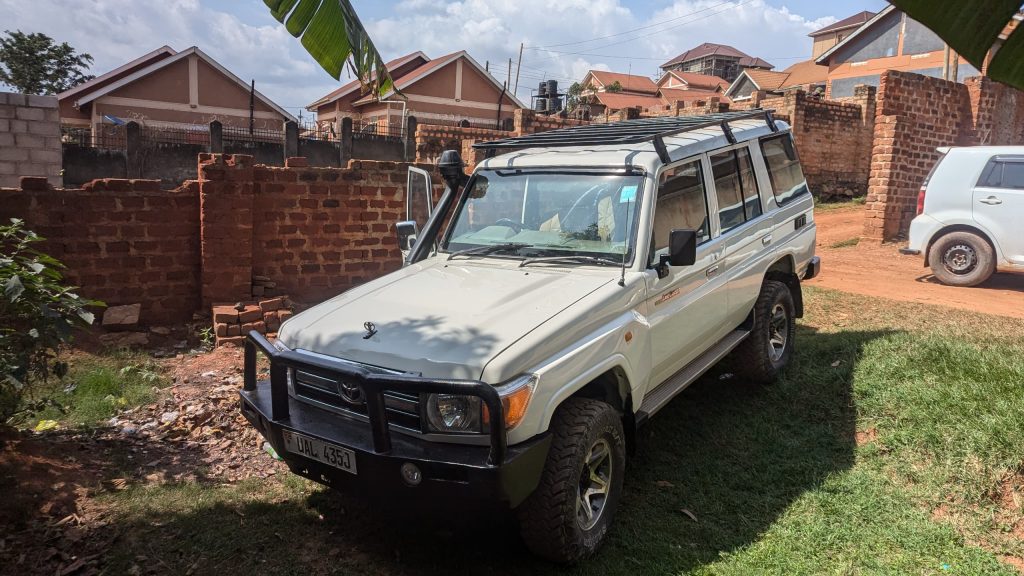
Vehicles that consistently perform well on this kind of trip include the Toyota Land Cruiser (both the 76-series and 100/200-series), the Toyota Land Cruiser Prado, and the Land Rover Defender. Look for a vehicle with:
- A snorkel and reliable low-range gearing for river crossings and mud
- All-terrain or mud-terrain tyres, plus at least one full-size spare (two is better for remote routes)
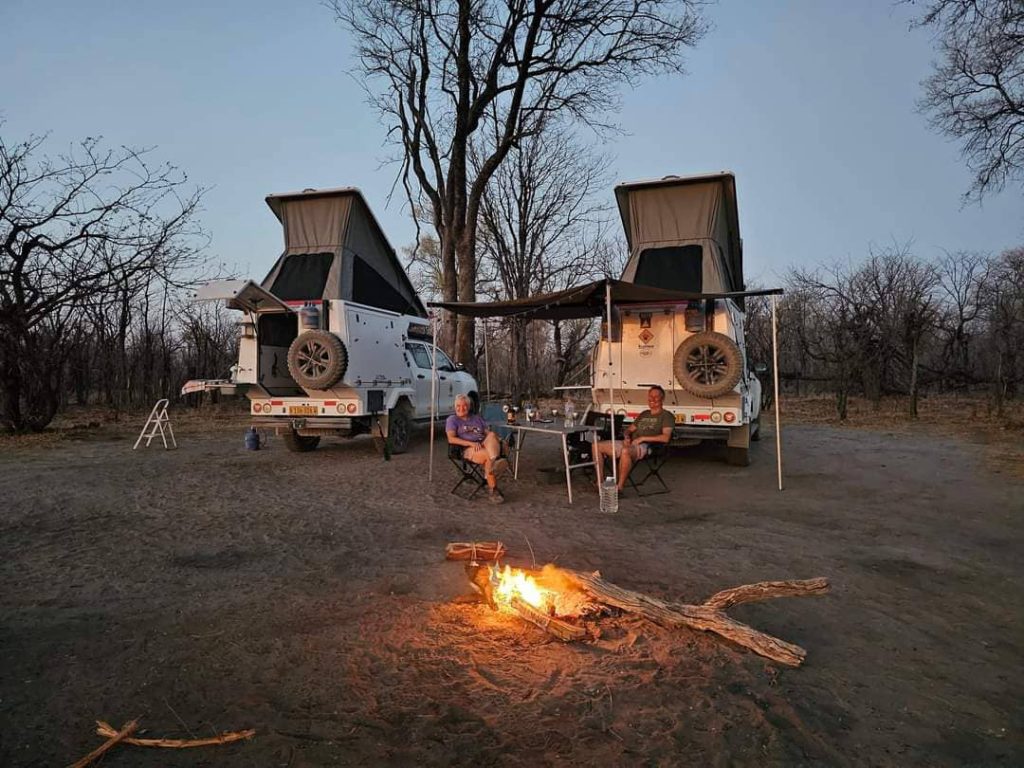
- A rooftop tent or safe rear storage if you plan to camp
- A dual battery system and functioning winch if you’re going off well-used tracks
- A recovery kit: sand ladders, a high-lift jack, tow rope, and a compressor
Renting vs. bringing your own vehicle. Most international visitors rent a fully equipped 4×4 from a specialist operator based in Nairobi, Kampala, Arusha or Kigali. This is by far the simplest option, because reputable rental companies handle the vehicle-specific cross-border paperwork for you and know which routes are currently passable.
If you rent, confirm three things in writing before you pay a deposit: that cross-border travel is explicitly permitted under your rental agreement, which countries are covered, and what the daily cross-border surcharge is, since many companies charge extra per border crossing or restrict certain countries entirely.
Step 3: Sort Out Your Visas
Visa planning is where most cross-border itineraries either come together smoothly or fall apart at the border. As of 2026, the region works like this:
The East Africa Tourist Visa (EATV) is a single joint visa covering Kenya, Uganda and Rwanda. It costs $100, is valid for 90 days from your first entry, and allows unlimited crossings between those three countries during that period.
You apply through the immigration portal of whichever of the three countries you plan to enter first this matters, because applying through the wrong country’s portal is one of the most common mistakes travellers make. Each country’s application platform is slightly different (Rwanda uses the Irembo portal, Kenya its own eTA-linked system, and Uganda its own e-visa portal), so double-check which one matches your actual entry point.
A few important limits on the EATV: it’s for tourism only, it cannot be renewed or extended, and leaving the three-country bloc for example, crossing into Tanzania invalidates it. If your route includes Tanzania, you’ll need a separate Tanzania visa (an e-visa, generally in the $50–$100 range depending on nationality), applied for independently.

Kenya’s ETA. Kenya now operates an Electronic Travel Authorisation system rather than a conventional visa for most nationalities, and it’s required in advance of travel unless your nationality is exempted. Apply at least a few days before you travel, and keep the approval saved on your phone and printed as backup.
What you’ll typically need to apply for any of these:
- A passport valid for at least six months beyond your travel dates
- A passport-style photo
- Proof of onward or return travel
- Proof of accommodation or your safari itinerary
- A yellow fever vaccination certificate (see below)
Apply two to three weeks ahead of departure wherever possible. Visa portals in the region occasionally experience delays, and you don’t want your first day of safari eaten up by a processing backlog.
Step 4: Get Your Vehicle Documents in Order
This is the part of trip planning that’s genuinely different from a normal safari, and it’s worth taking seriously, because a missing document at a border post can cost you hours or, in the worst case, turn you back.
COMESA Yellow Card. This regional third-party motor insurance certificate is recognised across Kenya, Uganda, Rwanda, Tanzania and a wide range of other COMESA member states, and it’s the standard way to cover your vehicle for cross-border driving without buying a fresh insurance policy at every single border. If you’re renting, ask specifically whether the Yellow Card is included in your rental price or charged separately it usually costs somewhere in the $50–$60 range if bought independently.
Carnet de Passage. For most East Africa-only routes, a full Carnet de Passage en Douane isn’t necessary, and many rental operators will tell you it’s more hassle and expense than it’s worth for a Kenya–Uganda–Rwanda–Tanzania loop.
What you do need instead is the vehicle’s registration/logbook, and critically, if you’re driving a rented or borrowed vehicle a signed letter of authority from the registered owner explicitly permitting you to take the vehicle across international borders. Border officials ask for this letter specifically, and its absence is one of the most common reasons self-drive travellers get held up.
International Driving Permit (IDP). Carry this alongside your home driving licence. Most East African countries accept a valid IDP without issue, but a small number of nationalities may need to arrange a local permit instead check this against your specific licence type before you travel.
Temporary Import Permits (TIPs). Some borders will issue a short-term import permit for the vehicle rather than requiring a Carnet, particularly for tourist vehicles staying for a limited period.
Your rental company or self-drive operator should tell you exactly what applies to your specific vehicle and route, since rules vary by border post and by the vehicle’s country of registration.
Keep physical copies of every document in a folder in the vehicle, plus photographed copies stored offline on your phone, in case originals are requested at more than one crossing.
Step 5: Take Care of Health Requirements
Yellow fever vaccination is the one health requirement that consistently affects border crossings in this region. Uganda requires proof of vaccination from every traveller over one year old, with no exceptions regardless of where you’re flying in from. Kenya requires it specifically for travellers arriving from a country where yellow fever is endemic.
Tanzania requires it from anyone who has spent more than twelve hours in a country with endemic yellow fever before arrival which in practice means that if your route takes you through Kenya before crossing into Tanzania, you will need the certificate. Given that most cross-border itineraries touch at least two of these countries, get vaccinated and carry the certificate regardless of your exact route; it removes the risk entirely and, in Uganda’s case, isn’t optional in the first place.
Beyond yellow fever, talk to a travel health clinic about malaria prophylaxis, since most of the parks and border regions on this route sit in malaria zones. Carry a basic first-aid kit, any personal medication in its original packaging, and a supply of rehydration salts useful after long, hot driving days.
Step 6: Understand the Border Crossings Themselves
Land border crossings on this route are generally straightforward once you know the drill, but they reward patience and preparation.
Common crossing points include Namanga and Isebania between Kenya and Tanzania, Malaba and Busia between Kenya and Uganda, and Katuna and Cyanika between Uganda and Rwanda. Each post typically has separate windows for passport/immigration processing and for vehicle/customs processing — don’t assume one queue covers both.
A few practical habits make crossings faster:
- Arrive early. Border posts get busy with commercial traffic by mid-morning; crossing shortly after opening avoids the worst queues.
- Have small denominations of US dollars. Some fees, particularly vehicle-related ones, are still requested in cash.
- Photocopy everything before you leave home base passport photo page, visa approvals, driving licence, IDP, vehicle registration, insurance and the owner’s letter of authority. Keep one set in the vehicle and a scanned set in cloud storage.
- Stay with your vehicle while paperwork is processed unless an official specifically directs you elsewhere, and be wary of unofficial “facilitators” who offer to speed up the process for a fee at land borders use official channels only.
- Confirm exit requirements before you leave a country, not just entry requirements for the next one; some travellers have been caught out by an exit-side requirement they hadn’t anticipated.
Step 7: Plan Your Budget
Costs vary widely depending on whether you’re self-driving a rented vehicle or bringing your own, how many nights you camp versus stay in lodges, and how many national parks you enter (park fees in this region are charged per person, per day, and are a significant line item often $60–$80 per person per day in premier parks like the Serengeti or Maasai Mara). Build your budget around these categories:
- Vehicle rental or fuel, plus daily cross-border surcharges if applicable
- Visa fees ($100 for the EATV, plus a separate Tanzania visa if relevant)
- COMESA Yellow Card and any temporary import fees
- Park entrance fees for each reserve on your route
- Accommodation: depending on your budget, campsites are dramatically cheaper than lodges, and many mid-range lodges sit between the two
- Guide or ranger fees where required (compulsory in some parks, like gorilla trekking permits in Bwindi or Volcanoes National Park, which are a major and separate cost worth researching early since permits sell out)
- A contingency fund of at least 15% for the unexpected a puncture, an extra night, a permit you hadn’t budgeted for
Step 8: Pack for the Route, Not Just the Weather
Beyond your usual safari packing list neutral-coloured clothing, a wide-brim hat, binoculars, sunscreen and a good camera a self-drive cross-border trip needs a few extras:
- A physical road atlas or offline GPS mapping (network coverage disappears fast outside towns)
- A satellite communicator or reliable local SIM cards for each country you’ll pass through
- Extra fuel capacity (jerry cans) for stretches between towns with reliable stations
- A basic vehicle toolkit, tyre repair kit and air compressor
- Cash in US dollars and local currency for each country, since ATMs are sparse once you leave major towns
- A dry bag or waterproof case for your document folder
A Sample 12-Day Itinerary
For travellers who want a concrete starting point, here’s how a well-paced Kenya–Tanzania cross-border route might look:
- Days 1–2: arrive in Nairobi and depart for Amboseli
- Days 3–4: Amboseli National Park ( game drives )
- Day 5: Drive to the Maasai Mara via the Rift Valley
- Days 6–7: Maasai Mara — game drives, optional Mara River crossing season
- Day 8: Cross the border at Isebania into Tanzania, drive to Serengeti
- Days 9–10: Serengeti National Park
- Day 11: Ngorongoro Crater
- Day 12: Drive to Arusha or Kilimanjaro International Airport for departure
Adjust the length in each park based on your interests, wildlife photographers often want an extra day in the Mara or Serengeti, while those focused on scenery might trim a day there and add one at Lake Manyara or Lake Nakuru.
Safety Considerations Worth Planning Around
Driving conditions, not wildlife, are the biggest safety factor on this kind of trip. Rural roads can be poorly lit, shared with livestock and pedestrians, and rough enough to demand a slower pace than you’d expect.
Avoid driving after dark outside towns wherever possible. Inside parks, stay in your vehicle except at designated spots, keep a safe distance from animals, and follow ranger guidance at all times this applies even when other vehicles are pushing closer for a photo.
Travel insurance that specifically covers self-drive 4×4 travel and off-road driving is worth confirming before you go, since some standard policies exclude it.
Frequently Asked Questions
Do I need a Carnet de Passage for an East Africa cross-border safari? For most Kenya–Uganda–Rwanda–Tanzania routes, no. A vehicle registration document, the COMESA Yellow Card, and for rented vehicles a signed letter of authority from the owner are generally sufficient. A Carnet becomes more relevant if your route extends further south into Southern Africa.
Can I use the East Africa Tourist Visa for Tanzania? No. The EATV covers only Kenya, Uganda and Rwanda. Tanzania requires a separate visa applied for independently.
How many days should I budget for a cross-border safari? A focused Uganda–Rwanda gorilla circuit can work well in 7–10 days. A Kenya–Tanzania wildlife loop is comfortable at 10–14 days. A full four-country grand loop usually needs three to four weeks to avoid excessive daily driving.
Is self-driving safe for first-time visitors to East Africa? It’s manageable with the right vehicle and preparation, but many first-time visitors choose to hire a self-drive vehicle with an experienced local guide for at least part of the route, or join a small guided convoy, particularly for the border crossings and more remote park tracks.
What’s the best time of year for a cross-border safari? The dry seasons roughly June to October and January to February offer the easiest driving conditions and the best wildlife visibility, since animals concentrate around permanent water sources. The Great Migration River crossings in the Maasai Mara typically peak between July and September.
Final Thoughts
A well-planned 4×4 cross-border safari rewards travellers who take the paperwork as seriously as the itinerary. Get your visas matched to your actual entry point, carry every vehicle document in duplicate, vaccinate against yellow fever regardless of your exact route, and build in enough time at each border for things to take longer than expected.
Do that, and the logistics fade into the background leaving you with what this kind of trip is really about: open roads, changing landscapes, and some of the best wildlife viewing on the planet, all from the driver’s seat.