
Kid-Friendly Car Rental in Uganda: Tips for Family Safaris
Kid-Friendly Car Rental in Uganda, Often dubbed as the pearl of africa, Uganda is one of the top destinations for family/kids travel. The country is a composure of tourist’s attractions such as viewing the most power fall falls in the world, the boat cruise on the Kazinga Channel where hippos surface just metres from the boat, and the short, easy walks to see chimpanzees in Kibale Forest. All of theses are enough here to hold a child’s attention without wearing out the adults planning the trip.
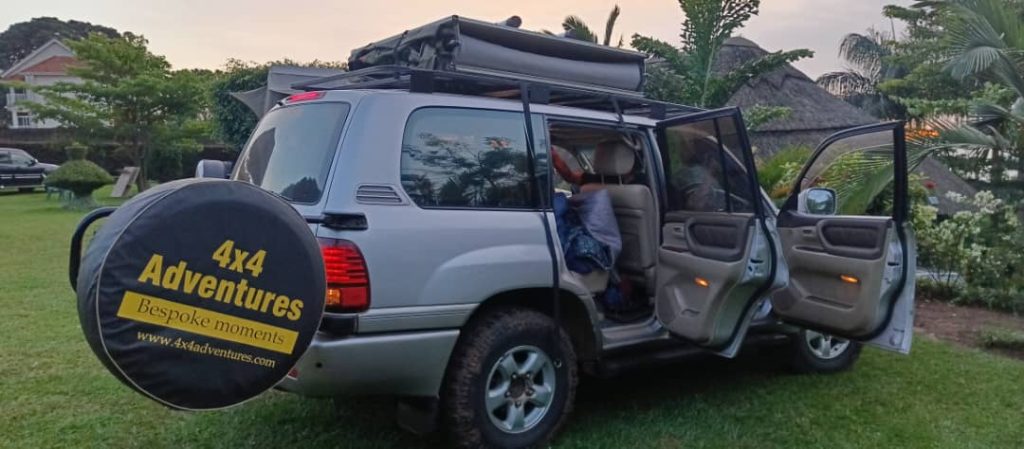
What often gets less attention, though, is which vehicle is suitable to carry everyone between those moments. A kid-friendly car rental in Uganda is not a luxury add-on. It is the difference between a family safari that flows and one where the youngest member of the group spends six hours complaining about the heat, the bumps, or the lack of a proper seat.
This guide walks through what actually matters when renting a car for a family safari in Uganda, from vehicle choice and child seats to road conditions, packing, and the parks that work best for younger travelers.
Why the Right Car Matters More with Kids on Board
Uganda’s national parks are spread across the country, and getting between them means real driving time. Kampala to Murchison Falls National Park takes roughly four to five hours.
The route from Queen Elizabeth to Bwindi Impenetrable Forest, home to mountain gorillas, winds through the Kigezi highlands and can take three to four hours on its own. Add unpaved sections inside the parks, occasional dust, and the odd pothole, and it becomes clear why the vehicle itself shapes how the whole trip feels.
For a couple travelling alone, a compact car with decent ground clearance is often enough. For a family, the calculation changes. You need space for luggage, room for children to stretch out, air conditioning that actually keeps up with equatorial heat, and a vehicle stable enough on murram roads that nobody in the back seat ends up feeling carsick by the second hour.

Choosing the Right Vehicle for a Family Trip
Not every rental car in Uganda is built for family travel, so it helps to know what to look for before you book.
Go for a 4×4 with genuine ground clearance. Roads inside parks like Murchison Falls, Kidepo Valley, and parts of Queen Elizabeth are unpaved and can turn slippery after rain. A Toyota Land Cruiser, Prado, or RAV4 handles these conditions far more comfortably than a saloon car, and the higher seating position also gives children a better view of the wildlife, which matters more than it sounds.
Priorities seating and legroom over top speed. A 7-seater minivan such as a Toyota Super Custom or a Land Cruiser with three rows works well for families of four to six, giving children enough room to nap, play, or simply sit without elbowing a sibling for four hours straight.
Check the air conditioning works properly before you drive off. Over heating in the car can turn out to hinder you and family from having an exceptional trip. Kids overheat faster than adults, and a rental with weak or broken AC turns even a short drive into a difficult one. Make sure your car that you rented has an AC. You can test it during vehicle handover, not after you have already left Kampala or Entebbe.
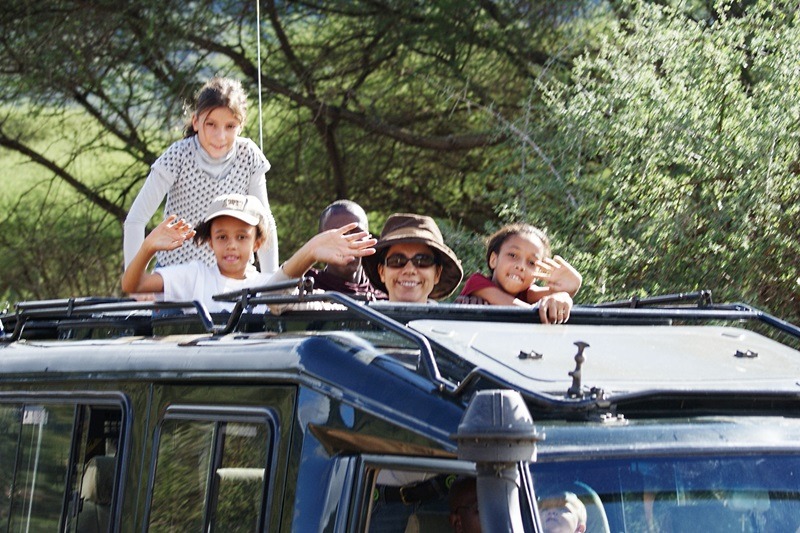
Look for a pop-up roof if game drives are on the itinerary. Make sure you book a vehicle with pop-up roofs. This will let children stand safely to view animals without leaving the vehicle, which is both safer and far more exciting for them than looking through a window.
Confirm luggage space matches your packing list. Family trips involve more bags, more snacks, and often a stroller or extra bedding. A vehicle that looks fine for adults can feel cramped once car seats, nappy bags, and cooler boxes are added.
Child Car Seats: What to Expect
This is the part many parents worry about most, and rightly so. Child car seats are not standard in most Uganda rental fleets, though the more established operators now stock them.
A few practical points worth knowing:
- Most rental companies that offer child seats charge a small daily add-on fee, typically in the range of a few dollars per day.
- Availability is limited compared to what you would find in the US or Europe, so request a car seat at the time of booking rather than on arrival. Confirm the exact age and weight range the seat is designed for.
- If you are travelling with an infant or toddler under three, consider bringing your own car seat from home. Most airlines allow this as checked luggage at no extra cost, and it guarantees a seat that fits your child correctly and that you already know how to install.
- For older children who have outgrown a full car seat but are still too small for an adult belt, ask about booster seats specifically, since some companies stock infant seats but not boosters.
- Always test the seatbelt fit and the seat’s stability in the vehicle before setting off, particularly if the seat was supplied by the rental company.
If a rental company cannot confirm a child seat in writing before pick-up, it is worth calling a second operator rather than assuming one will appear on the day.
Self-Drive or Car Hire with a Driver?
Uganda allows both self-drive and chauffeur-driven rentals, and for families the choice matters more than it might for a solo traveler.
Self-drive gives you full control over the schedule, which helps when a toddler needs an unplanned nap stop or a child needs a bathroom break that was not on the itinerary. It also tends to be cheaper. The difficulty is navigating unfamiliar roads, negotiating with rangers at park gates, and watching for wildlife on the road all fall to whichever parent is driving, which can be tiring on longer routes.
A car hire with a driver-guide removes that burden entirely. An experienced guide already knows which stretches of road need extra caution, where the rest stops with clean toilets are, and how to spot animals long before an untrained eye would.
For families with very young children, or for a first visit to Uganda, this option is often worth the extra cost simply for the reduced stress. Many driver-guides are also trained in basic first aid and are used to travelling with children, which adds a layer of reassurance.
A middle ground some families choose is self-driving the paved main roads and hiring a local guide for game drives inside the parks themselves, where knowledge of animal movement matters most.
Age and Licensing Requirements
Most Uganda car rental companies set a minimum driver age of 23 to 25 years, with some setting it as high as 27 for larger 4×4 vehicles. A valid driving license from your home country is usually accepted for the first three to six months of a visit, though carrying an International Driving Permit alongside it is strongly advisable, as some police checkpoints and rental agreements ask for one. Confirm this requirement with your chosen rental company before travel, since policies vary between operators.
Best Kid-Friendly Parks and Stops for a Family Safari
Not every part of Uganda suits younger children equally, so building an itinerary around family-friendly stops makes the road time worthwhile.
Lake Mburo National Park is compact, close to Kampala, and one of the few parks where short guided walks and cycling safaris are permitted, giving children a hands-on experience rather than hours of watching from a car window.
Queen Elizabeth National Park combines a game drive with a boat cruise along the Kazinga Channel, where hippos, buffalo, and elephants gather along the water. The channel cruise is a favourite with children because the animals come close without anyone needing to sit still for long stretches.
Murchison Falls National Park pairs a game drive with a boat trip to the base of the falls themselves, a dramatic sight that tends to impress children as much as adults.
Ziwa Rhino Sanctuary: This is a nice place to visit together with your family members. on the route to Murchison Falls, offers guided walks to see southern white rhinos on foot at a safe, controlled distance, which is often a highlight for younger visitors.
The Uganda Wildlife Education Centre in Entebbe is worth building into the first or last day of the trip. It is essentially a wildlife rescue center and small zoo, giving children an easy, low-pressure introduction to Ugandan wildlife before or after the more intensive park visits.
Gorilla trekking, by contrast, has a strict minimum age of 15, so families travelling with younger children should plan for one parent to trek while the other stays back with the kids, or build the itinerary around parks that do not require this restriction.
Health, Safety, and Comfort on the Road
A few precautions make a noticeable difference to how the trip feels for younger travellers.
Malaria prevention matters throughout the country: Uganda is a malaria-risk area, so speak to a travel health clinic well before departure about appropriate prophylaxis for children, and pack insect repellent suitable for young skin along with mosquito nets if staying in budget accommodation.
Seatbelts and child restraints are non-negotiable, even on short drives:Roads inside parks can be uneven, and sudden stops for wildlife crossing the road are common.
Carry a basic first aid kit with rehydration salts, plasters, antihistamines, and any regular medication your child needs. Rural clinics exist but are not always close to where you will be driving.
Sun protection is easy to forget in a vehicle with tinted windows, but equatorial sun is strong even through glass. Pack hats, sunscreen, and a water bottle for each child that can be refilled at lodges.
Avoid night driving wherever possible. This applies to all travelers in Uganda, but it matters more with children in the vehicle, since livestock, pedestrians, and poorly lit trucks on rural roads are harder to spot after dark.

Packing and Road Trip Tips for Families
Long drives between parks go far more smoothly with a little preparation.
- Incase you need a cooler box ask your rental company if one is included, since snacks and cold water make a noticeable difference on hot afternoons.
- Bring a few familiar, quiet toys or books rather than relying on charged devices, since some rural stretches have limited phone signal for streaming.
- Plan for a rest stop roughly every two hours on longer drives, both for comfort and to let children move around before the next long stretch.
- Pack a change of clothes in the cabin rather than the boot, useful for spills, dust, or an unexpected river crossing splash on a game drive.
- If travelling during the rainy seasons (typically March to May and September to November), build extra time into your schedule, since unpaved park roads slow down considerably after heavy rain.
What Kid-Friendly Car Rental Typically Costs
Prices vary by vehicle type, rental duration, and whether a driver-guide is included, but as a general guide:
- A compact 4×4 suitable for a small family runs from around $70 to $90 per day for self-drive.
- A 7-seater minivan or larger 4×4 with a pop-up roof, better suited to families of five or more, typically runs from $90 to $140 per day.
- A driver-guide adds roughly $30 to $50 per day, depending on the vehicle and route.
- Child seats are usually a small daily add-on, often between $3 and $10 per day, and should be confirmed and booked in advance.
- Rooftop tents and camping gear, useful for adventurous families combining a road trip with camping, are generally available as optional extras.
Always ask for a full written quote that includes insurance, mileage limits, and any airport delivery fees before confirming a booking.
Questions Families Often Ask
Do I need to bring my own child car seat to Uganda? It is not compulsory, since several rental companies now stock child seats, but availability is limited compared to Western countries. Booking one in advance is essential, and bringing your own remains the safest option for infants and toddlers.
Is self-driving safe for a family with small kids?
Yes, as long as you have a good 4×4, don’t drive at night and stop to rest on longer journeys. Self-driving between the main parks is popular with many families, particularly on the well-maintained roads connecting Entebbe, Lake Mburo and Queen Elizabeth.
Can children do gorilla trekking? no. Gorilla trekking has a minimum age limit of 15 years old, therefore families with kids under this age will generally take turns on the trip or orient the itinerary around other parks.
How many days should a family plan for a road trip in Uganda? A comfortable family safari covering two or three parks generally needs 7 to 10 days, allowing enough time for driving, wildlife viewing, and rest days without rushing between stops.
How much is renting a car in Uganda?
Car hire in Uganda costs differ depending on a few things such as the type of car, duration of rental, and extras. A standard automobile costs between $40 and $120 USD each day, depending on the size and kind of vehicle, with bigger and specialty cars costing more.
Final Thoughts
A family safari in Uganda rewards a bit of upfront planning, and nowhere does that planning pay off more directly than in the choice of vehicle. A spacious, well-maintained 4×4 with a confirmed child seat, a driver-guide who knows the parks, and a route built around genuinely kid-friendly stops turns long drives into part of the adventure rather than the part everyone tolerates to get to the next stop.
Book early, ask direct questions about child seats depending on the toddlers age and vehicle condition before you pay a deposit, and build in enough time on the road to actually enjoy the journey between Uganda’s parks, not just the destinations themselves.